
Mile
Zero
September 25, 2013
Strut Yo Stuff
Everybody has one style of dance that resonates with them. They may see house, or locking, or waacking, and immediately know that's what they want to do. For me, strutting clicked. I'm not particularly good at it, because I don't practice enough, but I'm tall and have a good memory for shapes and angles. The "feel" of strutting, too, is something I seem to grasp easier than when I was first learning b-boy toprock. In DC, I had a pair of knowledgeable mentors, Rashaad and Future. But in Seattle, there aren't a lot of people for me to crib from, so a few weeks ago I went to San Francisco to learn from the original strutters.
Strutting is not particularly well-known, even in the dance community. You're certainly not going to see it on "So You Think You Can Dance" any time soon. But it was hugely influential in its day — it was one of the precursors to popping, and from there a lot of hip hop movement — and it's made a bit of a comeback in recent years, due in part to the advocacy of a dancer named Lonnie "Pop Tart" Greene.
The descendent of a San Francisco style called boogaloo, strutting combines party dancing and "posing" with its own particular attitude to create something different: it emphasizes strong shapes and angles formed at punctuated stops. Strutters don't pop, they "dime-stop" by halting their motion right on the beat. If you do this fast enough, or with enough force, your muscles tend to contract hard enough that your body shakes a little — that's where the pop originally comes from.
You can perform solo, but strutting's defining feature is that it's a group activity. Standing shoulder-to-shoulder in a line, strutters competed in neighborhood talent shows and dance competitions for the length of an entire song: long, complex displays of synchronized and syncopated rhythm. Even today, while certain moves like the Fresno and the Fillmore have broken out into solo form, the best way to watch strutting is in its group form.
Here's a couple of videos from the BRS Alliance celebration I attended. In this one, Playboys Inc. runs through a pretty incredible routine. Watch out for the dominos, especially: the way they create a set of interlocking shapes, and then double the tempo, is a signature of strutting.
(Warning: the audience in these clips is extremely enthusiastic.)
Rashaad and Future also showed up with something they've been working on. It's a little rough, but I really like how they combine their newer styles with strutting. It's especially interesting the way they put more three-dimensional movement into their routines to compensate for only being two people.
A lot of what I learned on the trip, technique-wise, is evident in these two videos. It's not a specific movement — it's the feel of strutting, which combines a party swagger with sharp precision. As I mentioned, strutters and boogaloo dancers don't "pop" the way we think about it now. Instead, they just stop moving so precisely with the music that it creates the illusion of popping.
Along with that incredible dime-stop proficiency comes a real intentionality for all their movements. When the really good strutters make a movement, they commit to it completely. Their gaze extends along the arm or leg, and their body leans into the motion. I've always known that this was important, but seeing people whose dancing was so stripped-down, without all the surrounding technique that poppers have built up, was revelatory (and a lot of fun to watch).
I wasn't the only person who traveled for the weekend. People came from New York and DC to take part in the celebration and take classes from Pop Tart. You can tell that's a lot of pressure on him, and on the other dancers who were teaching that day. I've met him before, when he came to Soul Society, so I knew a little bit about what to expect, but I'd love to hear what the other visitors thought.
On first (or second, or third) glance, it's easy to think that Pop Tart is a little crazy. He gets names wrong in funny ways, and he's prone to outbursts about hip hop, which he feels took over and obscured the history of strutting. He's obsessed with his own biography, a relentless self-promoter who has written, directed, and filmed a movie in which assassins from the future are sent back to kill him and keep him from teaching other people the original Oakland styles. But to fixate on these things, which are undeniably a little nutty, is to misjudge the man.
Like almost all American folk dance, strutting and boogaloo comes from poverty. Unlike b-boying, which had a period of exploitation that its pioneers managed (with varying degrees of success) to turn into sustainable business, strutting stayed poor, and so did its innovators. For a long time, Pop Tart was forgotten. He and the other members of his crew, PT-3000, performed on boxes in Fisherman's Wharf as living statues and robot men. This is not a career that puts you in touch with a lot of other successful artists. You don't pick up a lot of social media tips.
If I shake off some of my deeply-ingrained prejudices as a middle class, white, East coast person, Pop Tart's eccentricities look less like craziness and more like ambition. I don't think he knows exactly how to get from where he is now to the kind of fame and influence he'd like to have — but then, who does? In the meantime, he's hustling as hard as he can, and the results are not unimpressive. Sure, his movies are shot on what looks like an old VHS camcorder, but he's working to document his culture the best way he can. He digs up footage of groups that everyone else has forgotten. He records interviews with the dancers that are still around. In fact, at the BRS Alliance dance celebration, he made a point of bringing back the original dancers, having them tell their stories, and presented a bunch of them with awards to recognize their influence, even in just a small way.
If anything, I learned as much from the stories these dancers told as I did from watching them move. It lends context to the movements, like learning that the distinctive cross-stepping motion used during a strutting routine comes from old Meow Mix commercials, or hearing how inventions like waving and popping traveled out of Oakland and into LA. I heard from the first dancer to use Kraftwerk as a backing track, which (given the dominance of electronica in modern popping) is kind of a big deal. Indeed, that context reaches beyond the dance itself, because strutting and boogaloo are very much the product of their times.
One of the oldest dancers I've met from Oakland is William "Mr. Penguin" Randolph, an original member of the Black Resurgents. Randolph is an incredibly kind, good-natured, grandfatherly gentleman. He is impeccably well-dressed, as you would expect from someone who emulated the Temptations and the Supremes.
But it's easy to imagine a time when Randolph would not have been seen that way by mainstream America, and not just in the sense of being a black man from Oakland, CA. Look at the names of the boogaloo groups: Black Resurgents, Black Messengers, Medea Sirkas, Demons of the Mind... these are names that reflect the black power movement in which they were created. The dancers weren't necessarily political, except in the sense that W. Kamau Bell once commented: "If you're black and you have opinions that don't rhyme, you're political." Their costumes and movements took inspiration from TV and movies, but also from their surroundings (there's a lot of pimp- and gang-inspired moves in the strutting repertoire).
Now, of course, these are just old guys from a bad neighborhood, trying to figure out where they fit and ride the (admittedly small) wave of rediscovery. They're still proud of where they come from, and simultaneously frustrated at having to be "rediscovered" in the first place. Lots of the speakers spent part of their time griping about Soul Train, which was kind of hilarious, when you think about it: dancers in most of the country see Soul Train as the program that helped bring African-American dance and music to a wider audience, but the Oakland dancers couldn't afford to travel down to Hollywood and dance in a studio for free, which means that strutting and boogaloo never reached the same prominence as LA styles like locking.
The boogaloos have a strong sense of regret about being passed over, even though there's probably nothing they could have done about it. Pop Tart even made a mini-documentary about the groups that never left San Francisco, called The Day Before Hip Hop. It's really obvious to them that history is written by the victors — except, can you have victors if there wasn't really a war? Nobody fought against strutting, it's just that nobody at the time really fought for it, for a whole variety of reasons only tangentially related to the dance itself.
In fifty years, when Pop Tart and Will Randolph and the other dancers aren't around, how much of the character will survive? How much is being preserved? It's a common concern troll by would-be hip hop academics that we need to set down an authoritative history for the culture, and to some extent they're right. But would a cut-and-dried account really be able to capture how weird and wonderful something like strutting can be? People like to say that the same dance moves recur throughout history, but of course that's not entirely true. The way you put those moves together matters, and it has a unique flavor from style to style.
We might as well ask how much of this history is reliable in the first place. How much can we believe? Was Oakland really the original home of huge swathes of hip hop dance? Or is it just myth-making in progress? At times like this, I like to remember the approach taken by Joe Schloss, NYU professor and late-blooming b-boy, in his groundbreaking work of hip hop dance history, Foundation: B-boys, B-girls, and Hip Hop Culture in New York:
The uprock debate embodies the benefits and liabilities of the b-boy approach to history. Full of mystery and apparent contradictions, it was never meant to be comprehensive. Each person has his or her own perspective, and each perspective is an important part of the overall fabric of urban dance history. If these stories resist being assimilated and smoothed over, perhaps that itself is where the significance lies. I would argue that b-boy history, like b-boying itself, has to be contentious. Any history that pleases everybody would-by that fact alone-lack important elements of b-boying: competition, ego, self-aggrandizement, battling. The goal of b-boy histories, like the goal of b-boying itself, is to represent yourself and your community. Is the Bronx more significant than Brooklyn? Are African Americans more important than Latinos? Is uprocking a gang dance or an anti-gang dance? It depends on where you stand, and it should.
In a way, I think it will almost be a shame for the woolly oral history of strutting to be tamed into a single, conventional narrative — even though such a simplification will probably help preserve the dance for the future. Strutting should always be a little unsettling, I think. True to the name, maybe it should strut its stuff, strike its poses, and then — when the song ends — step back into dangerous obscurity.
And as for me? Where, as Schloss says, do I stand? I have no particular authority on strutting, of course, but that doesn't mean I'm not invested. There's a lyric from Yasiin Bey's "Fear Not of Man" that I love, where he says:
People be asking me all the time,
Yo Mos, what's gettin' ready to happen with hip hop?
(Where do you think hip hop is goin'?)
I tell 'em,
You know what's gonna happen with hip hop:
Whatever's happening with us.
If we smoked out, hip hop is gonna be smoked out.
If we doin' all right, hip hop is gonna be doin' all right.
People talk about hip hop like it's some giant
Living in the hillside
Comin' down to visit the townspeople.
We are hip hop.
Sometimes it's hard for me to tell where I stand in regards to dance. Unlike a lot of people in Urban Artistry, I don't really like going to clubs. I don't battle as much as I probably should. I'm a little introverted. But while I'm not a part of strutting's history, it is part of mine. Its context — from black power to funk music to urban sprawl — is my context, as an American. And so while it's sometimes difficult for me to figure out how to represent strutting and popping respectfully, the journey is near and dear from my heart. I came back from Oakland a little more knowledgeable, a little more uncertain, and a little closer to understanding. What more could I ask?
May 8, 2013
That's Guerrilla With a U

Soul Society is here again, and so am I. If you're in the DC area this weekend, check it out.
September 13, 2012
Style Wars
On Google Plus, for no reason other than it seemed like a good idea at the time, I've started writing posts about dance videos on YouTube--either footage of events I've been to, or cool examples that I've seen other dancers posting elsewhere. It's a fun chance to introduce people to urban dance culture, as well as good mental practice.
In DC, and particularly as a part of Urban Artistry, I got used to seeing people switch between styles regularly--and in some cases to unexpected combinations, like African or waacking. Here, that seems less common: there's a lot of b-boys and a lot of dubstep poppers, and most of them stick to their particular specialty. Which is a shame, because I'm starting to realize, both from watching events live and on YouTube, that a great all-styles battle is pretty much my favorite kind.
What makes all-styles battles so great? I think it's a combination of factors:
- They can be surprising. I've been to long b-boy battles, and by the thirtieth crew it doesn't matter what they do, the crowd is dead from watching so many windmills, jackhammers, and flares. In all-styles, by comparison, the moves are probably less strenuous but you never know what's coming up next.
- They're more musical. The tricks of a given style take on more importance in single-style battles, but when two dancers come from completely different traditions, what they have in common is dancing, not power moves or acrobatics. That makes these match-ups a lot more inviting for newcomers, too.
- They're more challenging. You never know what music someone will be dancing to. At some jams, I've seen the contestants allowed to pick their own genre, but most of the time it's just whatever the DJ feels like playing--and I think they use these as opportunities to dig out some real oddball tunes. If nothing else, watching some poor hapless dubstepper forced to dance to disco music is always amusing.
Dancers often talk about movement as a conversation. But battling across styles, especially when all the participants have more than one skillset, is a great way to literalize that. Take this clip from Northwest Sweet 16 a few months ago, where both crews trade exchanges back and forth, often beginning their turn in one genre as a response and then transitioning to another as a challenge. It's a ridiculously good show from a group of talented Vancouver dancers.
I wish there were more jams like that. Just as outside the cypher, diverse workplaces have higher productivity, all-styles battles are great inspiration for dancers of all types. I'm trying to take that lesson to heart, and keep learning new dances (even ones I don't really like). A couple of weeks ago I took a class in waacking (best Wikipedia article ever). I have no hope of ever being good at it, but learning how its distinctive arm movements work gave me a ton of new ideas for strutting and locking (and it was a great workout). Specialization would have robbed me of that experience.
I'm always amazed by people who say that you should focus solely on a single style. Almost everywhere in my life, learning in one area has enriched and illuminated others, and dance is no exception. For that matter, if I weren't trying to stay open to new influences, I wouldn't have started b-boying in the first place. Whether you're a dancer, a writer, a coder, or whatever, it's almost always a good idea to take a moment once in a while and do something strange and uncomfortable. It might be inspiring, or a surprising mix with what you already know. You might like it.
September 28, 2011
Still Crafty
This Saturday is Crafty Bastards 2011, DC's annual craft fair and b-boy battle. Two years ago, it was one of the first battles I attended, and last year it was my first public b-boy battle, so I have a soft spot for the event. I'm not entering this year, but I thought it would be a good time to write a little bit about what I've been doing lately, dance-wise.
In February, I joined Urban Artistry as a performer and part of the operations team (helping on the web sites, mostly). Over the past year, that role has grown somewhat, and I'm now the Director for Interactive Media for the company. It's been a great experience to help UA grow, even in small ways, and I'm pretty proud of that work.
In the meantime, I've still been working on b-boying, popping, and strutting. The latter, a popping style from San Francisco, is something that I really enjoy: it has a lot of exaggerated gestures, which work well with my height, and it can be performed in stunning group routines. One of the inventors of strutting, Pop Tart, even came to Soul Society to judge and teach a workshop:
Dancing has also re-kindled my interest in playing bass. I've been doing a few open mics lately after class on Thursdays, practicing with other company members, and trying my hand at new genres. Whether the two skills are directly reinforcing each other, I'm not sure. But I do find it interesting that I "hear" music differently from people with a pure dance background: I tend to pick out individual instruments more than they do, for one thing, possibly just because I know which sounds go with what. It's not better or worse, but it is different, and I'd like to learn to listen from either "perspective" at will.
It's kind of ironic that all this is coming together now, as Belle and I get ready to move to Seattle before the end of the year. The dance community here may not have completely turned around my opinion of the city, but it's done more than anything else to open my eyes to a more vital side of DC. Leaving it behind will be hard.
May 16, 2011
Origins: One Heartbeat
We've been busy since Soul Society: Urban Artistry will be performing this Saturday with Coyaba Dance Theater and Capitol Tap for a show titled Origins: One Heartbeat. It's $15 for general admission, with student and senior prices available, at the Montgomery College Performing Arts Center in Silver Spring. Check out the site for more details, a video with some background information, and a link to buy tickets. Hope to see you there!
April 11, 2011
Soul Society: This Weekend
My free time this week is going to be absorbed by Soul Society activities, including tomorrow night's parkour lesson, Thursday's MC showcase, and the DJ battles on Friday. So there won't be any posts here--except, of course, for this unsubtle pitch.
Anyone in the DC metro area looking for something to do this weekend should definitely come by the Artisphere on Saturday for the battles, and Sunday for workshops taught by our guests from around the world. There's also a free film festival and art exhibit on both days. Come by, check out the art, watch me embarrass myself in the cyphers, and see some truly amazing dancers from the area, across the country, and internationally. Details and more at internationalsoulsociety.com.
March 15, 2011
Juste Debout
Congratulations to Urban Artistry's Tasha and Toyin, the first women and first entrants from the USA to win the international Juste Debout house dance competition. It's a pretty amazing battle. Just look at that stadium!
March 2, 2011
B-Boy Year One: Learning to Fall
Part of a series looking back at my first year of breakdancing. I didn't post this with the others, for some reason.
"The ground is your friend," said my first breaking teacher, Emily. "It's always there for you. You've got to get comfortable with the ground."
I am not naturally friends with the ground. At best, it is a dirty, hard surface. At worst, it is covered in things to trip me, and filled with burrowing insects. I don't instinctively trust the ground, and my basic ground-related strategy--cultivated over years of low physical exertion--has been to keep it at a neat distance by walking upright.
But you can't dance without paying attention to the space around and beneath you, especially in hip-hop dance (which has a playful relationship with illusions of weight and time) and especially in breaking. Its central feature, after all, is that dancers drop to the floor and move rapidly on all fours--to the point that b-boys and b-girls have reappropriated the word "footwork" for it. This kind of movement means that I've had to get used to being much closer to the ground than usual, and also that I have to get there from a standing position. In both cases, this means learning to fall down, on purpose.
Falling is something that kids do naturally. They don't think twice about it, because they're deeply convinced of their own invincibility. Adults have mostly lost the knack. Learning to fall (and by extension, learning to breakdance) means reacquiring the confidence that if you hit the ground the wrong way, the worst injury you'll incur is to your dignity. Take that step, and you're on the path to awareness of the ground, and the gravity that pulls you down to it. Both are constant companions that we might otherwise ignore, much as a fish might ignore bouyancy.
I am not quite there yet, mind you. I still freak out a little when I try to flip over into a backspin. But I'm starting to get the idea--I'm starting to make friends with the ground. Much like the cypher, I think that a b-boy or b-girl's close relationship with the floor surface shapes an important part of their mentality. A dancer needs to account for enough space to perform on the ground, as well as keeping enough control to move in tight confines. They need to be able to edit their vocabulary to fit the particular limitations of a given surface, be it concrete, lineoleum, wood panel, or marble. A b-boy or b-girl is always battling, not just with another dancer, but also with the dance environment. And from that struggle comes creativity and flavor.
February 2, 2011
Soul Society
Urban Artistry's International Soul Society Festival just launched its website, with HTML and JavaScript by yours truly. The page had mockups ready, but the designer had to take another job before he could actually build it, and I volunteered to pick up where he left off. We'll be updating it regularly as the date gets closer, and there are links to various social media channels if you'd like to subscribe.
If you're in the area when April rolls around, this is something to put on your calendars. Soul Society is one of the biggest and best events for urban dance and music that DC has to offer. It's family-friendly, with workshops and events for all levels, and the talent on display--from the judges, the guests, and the competitors--is going to be off the charts this year, with popping, breaking, and all-styles battles. Check it out!
September 28, 2010
Battle Royale
(inspired by, via, in the style of Run DMC)
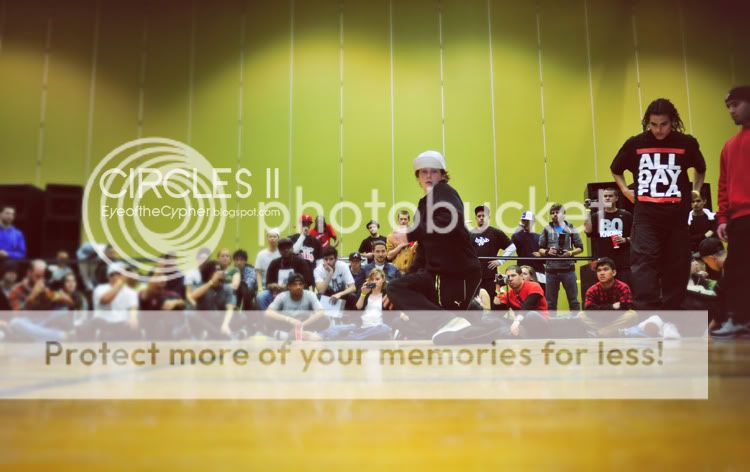
This Saturday, October 2nd, I'll be taking part in the Crafty Bastards breakdance battles in Adams Morgan, DC. People have often asked me, since I started breaking, when they can come see a performance. Unfortunately, b-boys and b-girls don't really do recitals, and most battles are held in odd locations with a $15+ cover charge. But early on I attended Crafty Bastards--a free, outdoor, family-friendly battle held in conjunction with a craft fair--and decided that I'd try to make it my first formal battle, where friends and family could come watch.
So on Saturday, I'll be battling alongside b-girl KT B as Steak and Cake Crew. The competition starts around 2pm, at the Marie Reed Learning Center in Adams Morgan. In addition to myself, there will be a range of amazing local b-boys and b-girls performing incredible acts of rhythm, power, and coordination. DJ Stylus Chris will be playing funk, soul, and old-school hip-hop for the event. Also, there's a craft fair, if you're into that kind of thing.
I am nervous as all get out, people. I'm spending most of this week in last-ditch practice mode. But I have modest goals: get out there, have some fun, and not embarrass myself. If you're in the area, come on out and say hello!
